.png)

Learn the requirements, qualifications, registration process, and career pathway to become a Registered Nurse in Australia.
Healthcare is one of the fastest-growing industries in Australia, and Registered Nurses (RNs) play a vital role in hospitals, aged care facilities, community health, and disability support services. If you enjoy helping people, have strong communication skills, and want a rewarding career, nursing can be an excellent choice.
Many people search for how to become a registered nurse in Australia because they want to understand the education, registration, and career pathway. This guide explains the complete process, the qualifications required, career opportunities, and how staffing agencies like Heartline Nursing connect qualified nurses with healthcare providers across South Australia.
Registered NurseA Registered Nurse (RN) is a qualified healthcare professional who provides medical care, monitors patients, administers medications, develops care plans, and works with doctors and other healthcare professionals to improve patient outcomes.
If you're wondering how to become an RN, understanding the education and registration process below is the first step.
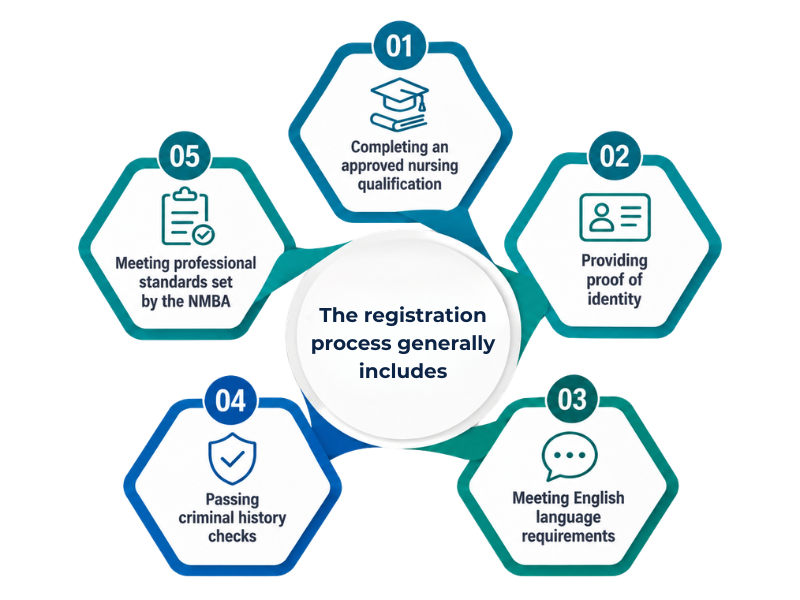
Before diving into the step-by-step process, here's a quick overview of the core requirements for registered nurse registration in Australia:
Meeting these requirements allows nurses to provide safe, high-quality healthcare across Australia. Let's break each step down in detail.
The first step is completing an approved nursing qualification.
In Australia, you must complete a Bachelor of Nursing or another Nursing and Midwifery Board of Australia (NMBA) approved nursing program. Most Bachelor of Nursing degrees take around three years of full-time study.
Students also complete supervised clinical placements in hospitals and healthcare settings to gain practical experience. This is the foundation of how to become a registered nurse in Australia.
Practical experience is an essential part of nursing education.
Universities require students to complete clinical placements in different healthcare environments. During these placements, students work under experienced nurses and gain hands-on experience in patient care.
These placements help students build confidence before entering the workforce.
After completing an approved nursing degree, graduates must register with the Australian Health Practitioner Regulation Agency (AHPRA).
Without AHPRA registration, you cannot legally work as a Registered Nurse in Australia. This is one of the most important requirements for registered nurse registration in Australia which has to be renewed every year.
Once registered, you can begin applying for nursing positions.
Many new graduates start their careers through graduate nursing programs called Transition to Professional Practice Program (TPPP) offered by hospitals. Others find opportunities in aged care, disability support, community healthcare, or through nursing agencies.
Heartline Nursing supports healthcare providers across South Australia by supplying qualified:
Education is only one part of becoming a successful nurse. Employers also look for professional skills that help nurses deliver safe and compassionate care.
Developing these skills will help you succeed throughout your nursing career.
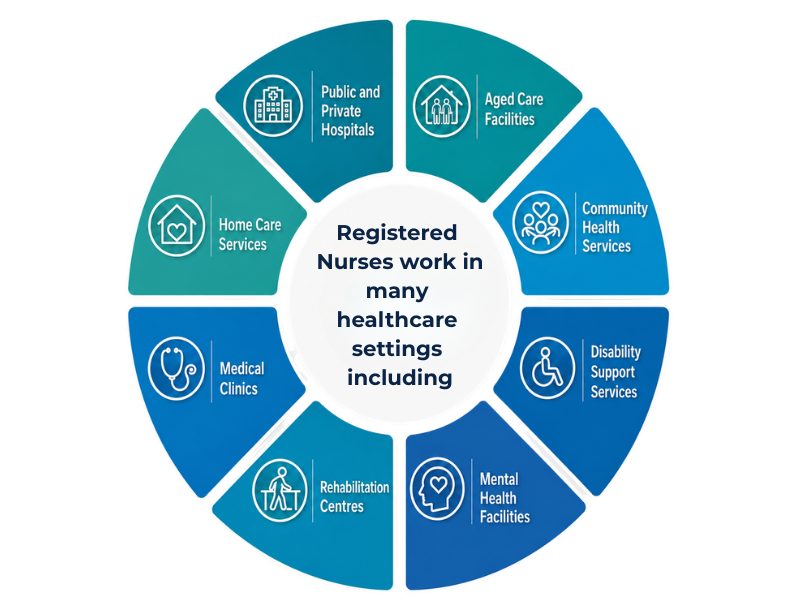
Registered Nurses have many career options in Australia. They can work in:
As nurses gain experience, they may also move into leadership, education, research, or specialist nursing roles. Understanding how to become a registered nurse in Australia can open the door to many rewarding career paths.
Nursing offers many benefits beyond financial rewards. Some advantages include:
If you are asking how do I become a registered nurse, remember that nursing is both a challenging and highly rewarding profession — and one of the most in-demand career paths in Australia today.
Healthcare organisations need qualified professionals they can rely on. Heartline Nursing provides experienced nursing and care staff to hospitals, aged care facilities, and community services across South Australia.
By connecting skilled healthcare professionals with employers, Heartline Nursing helps ensure quality care for patients and communities. Whether you are beginning your nursing journey or already registered, understanding how to become a registered nurse in Australia is the first step toward a successful healthcare career.
Choosing nursing is an investment in a meaningful and respected profession. The pathway includes completing an approved nursing degree, gaining practical experience through clinical placements, registering with AHPRA, and continuing to develop your professional skills throughout your career.
If you've been researching how to become a registered nurse in Australia, following these steps will help you move confidently toward becoming a Registered Nurse. With strong demand across hospitals, aged care, disability support, and community health, nursing continues to offer excellent career opportunities throughout Australia.
Registered NurseWhat qualifications do you need to become a Registered Nurse in Australia?
+You need to complete an NMBA-approved Bachelor of Nursing (or equivalent) and register with AHPRA before practising.
How long does it take to become a Registered Nurse in Australia?
+A Bachelor of Nursing typically takes around three years of full-time study, followed by AHPRA registration.
What degree is required to become a Registered Nurse in Australia?
+An approved Bachelor of Nursing is the standard qualification required.
How do I register as a Registered Nurse in Australia?
+After completing your nursing degree, apply for registration through AHPRA by meeting identity, English language, and professional requirements.
Do I need AHPRA registration to work as a Registered Nurse in Australia?
+Yes. AHPRA registration is mandatory for anyone practising as a Registered Nurse in Australia.
Can international nurses become Registered Nurses in Australia?
+Yes. International nurses can apply after meeting AHPRA assessment, English language requirements, and other registration standards.
What skills are required to become a Registered Nurse?
+Important skills include communication, empathy, critical thinking, teamwork, organisation, adaptability, and clinical decision-making.
Is Registered Nursing a good career in Australia?
+Yes. Registered Nursing offers strong job demand, career stability, competitive salaries, and opportunities to specialise in many healthcare fields.
How much does a Registered Nurse earn in Australia?
+Salaries vary depending on experience, location, and employer, but Registered Nurses generally earn competitive wages with additional allowances for shift work.
What is the difference between a Registered Nurse and an Enrolled Nurse in Australia?
+A Registered Nurse completes a Bachelor of Nursing and has a broader scope of practice, while an Enrolled Nurse usually completes a Diploma of Nursing and works under the supervision of a Registered Nurse.