.png)

Learn what an Assistant in Nursing does, their key responsibilities, where AINs work, and the skills and requirements for this healthcare role.
Healthcare teams in Australia include professionals with different qualifications, responsibilities, and scopes of practice. Assistants in Nursing (AINs) play an important supporting role by helping patients and residents with everyday care and comfort.
If you are researching what an AIN is, it is useful to understand that an AIN works as part of a healthcare team and generally supports Registered Nurses (RNs) and Enrolled Nurses (ENs). AINs can work in hospitals, aged care, community care, and other healthcare environments, depending on their training and the requirements of their employer.
This article explains the role of an AIN, their common duties, work settings, qualifications, and how they fit into Australia's healthcare system.
AIN stands for Assistant in Nursing. An AIN provides support to nurses and other healthcare professionals while helping patients or residents with their everyday care needs.
So, what is an AIN in practical terms? An AIN is a healthcare support worker who performs tasks within their training, competence, and workplace requirements. Their work can help nurses provide safe and efficient care.
AINs do not have the same registration or scope of practice as Registered Nurses or Enrolled Nurses . Their exact duties can vary depending on their workplace, training, employer, and relevant policies.
People often search for “what is AIN in nursing” when they are considering a healthcare support career. AINs are an important part of the broader healthcare workforce.
They may assist with activities such as:
AINs work as part of a team and communicate with nurses about the needs of patients and residents.
In Australia, many AINs are nursing students (Bachelor of Nursing, or sometimes Diploma of Nursing) who work part-time on wards while studying. For many hospital AIN roles, being enrolled in a nursing course is the main requirement, so there is no separate qualification to complete.
AIN responsibilities can differ between workplaces. However, the role generally focuses on supporting patients and residents with daily care and comfort.
AINs may help patients or residents with personal hygiene, dressing, grooming, toileting, and other everyday activities. Care should be delivered respectfully, with attention to privacy and individual needs.
An AIN may support people when moving between a bed and chair or while walking. This assistance should follow approved manual handling procedures, individual care plans, and workplace safety requirements.
AINs can assist people who need support with eating and drinking. They may also report concerns about food or fluid intake to the appropriate nurse.
Providing reassurance and respectful support is another important part of the role. AINs can help people feel comfortable and maintain their dignity during everyday care.
AINs may observe patients or residents during their normal duties and report relevant changes or concerns to the supervising nurse. They should follow workplace procedures and escalate concerns appropriately.
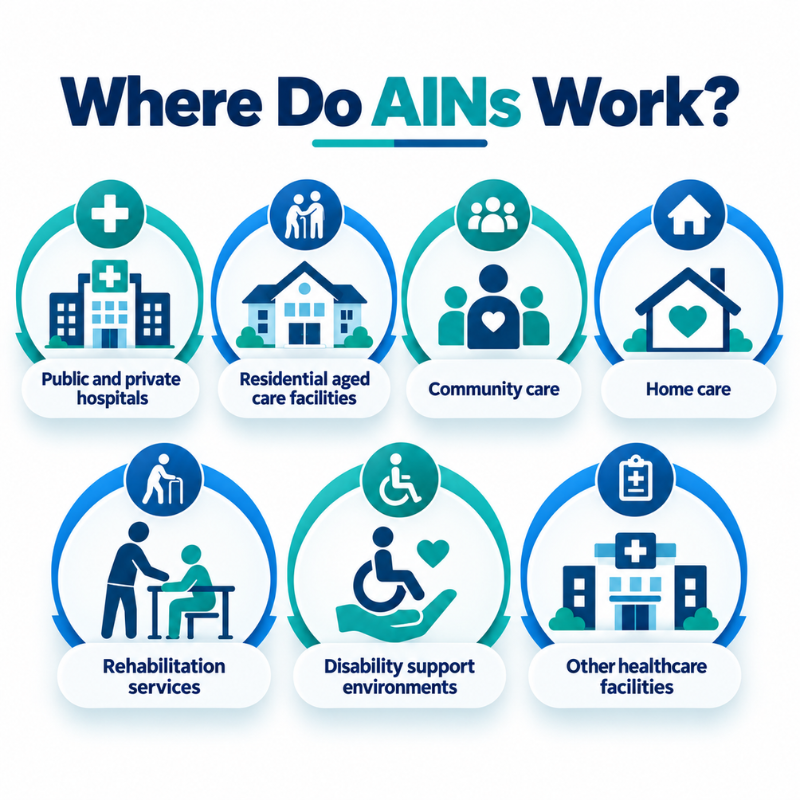
Understanding what is an AIN also means looking at the different environments where they can work. AINs may find employment in:
The exact responsibilities depend on the organisation and the person's training.
In hospitals, AIN responsibilities can involve supporting patients and nursing teams with appropriate non-clinical and care-related tasks
Depending on their training and authorised duties, an AIN may assist with:
AINs must follow workplace policies and only perform tasks they are trained and authorised to undertake.
An AIN and an Enrolled Nurse have different qualifications and professional roles.
An Enrolled Nurse is a regulated health practitioner who completes an approved nursing qualification and must meet the requirements for registration with the Australian Health Practitioner Regulation Agency (AHPRA) .
An AIN is generally a healthcare support worker and does not have the same registration status or scope of practice as an EN.
An AIN's role is primarily focused on supporting patients, residents, and nursing staff, while an EN has a broader nursing role within their authorised scope of practice.
Assistants in Nursing (AINs) and Personal Care Workers (PCWs) do similar work, including personal care, mobility support, and help with meals and daily activities. The main difference is where each title is most commonly used.
AINs are most often employed in hospitals, where they support nursing staff with patient care on the ward.
PCWs are most often employed in residential aged care and community settings, where they support residents and clients with daily living. Most PCW roles require a Certificate III in Individual Support or an equivalent qualification.
Job titles and requirements vary between employers, so always check the position description and the qualifications needed before applying.
AINs commonly work as part of a healthcare team and may work under the direction or supervision of Registered Nurses or Enrolled Nurses, depending on the workplace and task.
This teamwork helps ensure that patients and residents receive appropriate care. AINs should follow instructions, workplace policies, and their defined scope of duties.
Knowing what is an AIN also means understanding that AINs should not independently perform tasks that require professional nursing registration or fall outside their training and authorisation.
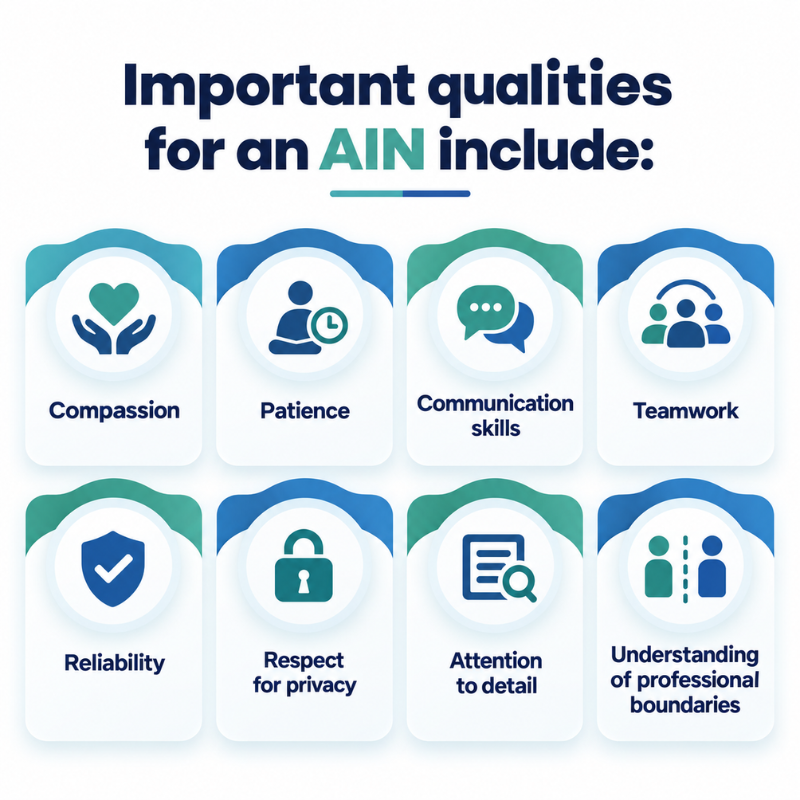
AINs provide valuable support to healthcare teams by assisting with everyday patient and resident needs. Their work allows nurses to coordinate care while AINs contribute to comfort, personal care, mobility, and other appropriate support activities. Strong communication is important. AINs need to communicate respectfully with patients, residents, families, and other healthcare professionals. Important qualities for an AIN include:
If you are a nursing student or a healthcare support worker looking for AIN work, Heartline Nursing regularly works with hospitals, aged care providers, community care, and disability support services across South Australia. You can view current roles and apply on the Heartline Nursing careers page.
Working as an AIN can help individuals gain experience in healthcare and understand the needs of patients, residents, and nursing teams. The role may also be relevant to people studying nursing who want to develop practical experience alongside their education.
Some AINs choose to pursue further education to become Enrolled Nurses or Registered Nurses. This requires completing the appropriate approved qualification and meeting the relevant registration requirements.
Depending on their training and experience, AINs may explore opportunities in:
Heartline Nursing provides qualified and reliable healthcare staff across South Australia. The organisation supports hospitals, aged care providers, community care, and disability support services.
Its workforce includes:
For healthcare organisations that require dependable staffing support, Heartline Nursing connects them with skilled professionals who can contribute to patient and resident care.
For AINs, working with an experienced healthcare staffing provider can provide opportunities to work across different healthcare environments and develop valuable experience.
So, what is an AIN? An Assistant in Nursing is a healthcare support professional who assists patients, residents, and nursing teams with appropriate everyday care and support.
If you are considering an AIN career, understanding your training requirements, workplace expectations, scope of duties, and supervision arrangements is important. With opportunities across hospitals, aged care, community care, and other healthcare environments, AINs can play a valuable role in Australia's healthcare workforce.
What does AIN stand for in nursing?
+AIN stands for Assistant in Nursing. AINs support nurses and healthcare teams with appropriate patient and resident care activities.
What does an Assistant in Nursing do?
+An Assistant in Nursing may assist with personal care, mobility, meals, comfort, hygiene, and other everyday support tasks within their training and workplace requirements.
What are the main duties of an AIN?
+Common duties include assisting with personal hygiene, dressing, mobility, meals, bed making, comfort, and reporting relevant observations to supervising nurses.
Where can an AIN work in Australia?
+AINs may work in hospitals, residential aged care, community care, home care, rehabilitation, disability support, and other healthcare settings, depending on their training and the employer.
What is the difference between an AIN and an Enrolled Nurse?
+An Enrolled Nurse completes an approved nursing qualification and meets the requirements for professional registration. An AIN is generally a healthcare support worker with a different scope of duties.
What is the difference between an AIN and a Personal Care Worker?
+The roles can overlap, particularly in aged care. However, job titles, qualifications, duties, and employer requirements can differ between positions and healthcare settings.
What qualifications do you need to become an AIN?
+Requirements vary between employers. Some positions may require relevant healthcare qualifications, practical training, first aid, infection control knowledge, manual handling training, and background checks.
Do AINs work under the supervision of Registered Nurses?
+AINs commonly work as part of a healthcare team under the direction or supervision of nurses, depending on the workplace, role, and task.
Can an AIN provide personal care to patients and residents?
+Yes. Personal care can be an important part of an AIN's role, provided the task is within their training, workplace requirements, and authorised duties.